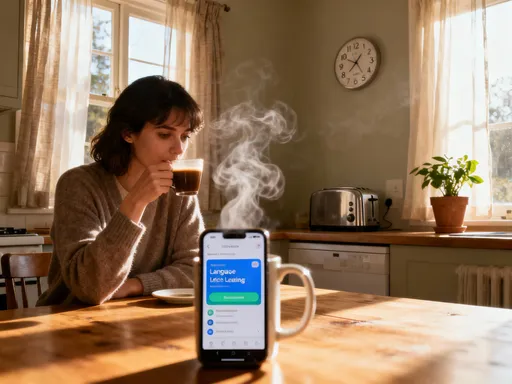
From Scattered Moments to Steady Growth: How Tiny Time Blocks Can Transform Your Learning Journey
Life moves fast, and finding hours to learn something new often feels impossible. You’re not alone—between work, family, and daily chaos, growth can slip through the cracks. But what if those stolen five-minute moments—waiting for coffee, riding the bus, or pausing between meetings—could actually add up? With the right tools, you can turn scattered time into real progress. It’s not about adding more to your day. It’s about using what you already have in a smarter, gentler way. And the best part? You don’t need a perfect schedule or a quiet house. You just need a few minutes and the willingness to begin. Let me show you how.
The Myth of the Perfect Learning Moment
How many times have you said, “I’ll start next week,” or “I’ll do it when things calm down”? We’ve all been there. You want to learn a language, get better at cooking, or finally understand how to manage your budget—but you’re waiting for the perfect moment. That magical stretch of uninterrupted time when the kids are quiet, the laundry is folded, and your mind is clear. But let’s be honest: that moment rarely comes. And when we keep waiting for it, we end up doing nothing at all.
This isn’t just about time. It’s about a mindset—one that tells us learning has to be big, formal, and serious to count. We imagine sitting at a desk with textbooks, or spending hours in front of a screen. But real life doesn’t work that way. The truth is, you don’t need a perfect moment to make progress. You just need a moment. Any moment. Five minutes while the oven preheats. Three minutes while you wait for a video call to start. These tiny spaces are already in your day—they’re just hiding in plain sight.
I remember when I wanted to learn Spanish. I signed up for an online course and told myself I’d do one full lesson every evening. By day three, I was already behind. Work ran late. The kids needed help with homework. Then one night, I was stuck in the car during pickup, waiting 10 minutes in the school line. On a whim, I opened a language app and did a quick exercise. It wasn’t much. But I felt good. And the next day, I did it again. That small shift—from waiting for the perfect time to using whatever time I had—changed everything.
Meet the Hidden Hours in Your Day
Let’s play a little game. Think about your typical day. Not the ideal version—the real one. How many times do you find yourself waiting? For the kettle to boil. For a meeting to start. For your teenager to finish getting ready. These moments might feel like wasted time, but they’re actually little pockets of opportunity. Most of us have 20 to 30 of these micro-moments every single day. And if you used just half of them for learning, you’d gain over two hours of growth time each week—without changing your schedule at all.
The key is to start noticing them. Try this: for one day, carry a small notebook or use your phone’s notes app. Every time you’re waiting—really waiting, not scrolling mindlessly—write it down. “5 minutes at the doctor’s office.” “7 minutes while dinner cooked.” “3 minutes in the elevator.” At the end of the day, add them up. You might be surprised. I did this once and found I had over 45 minutes of hidden time. That’s almost a full class!
But here’s the real shift: it’s not about finding time. It’s about reframing it. Instead of asking, “Do I have an hour to study?” ask, “What can I do in five minutes?” That small change in language makes a big difference in mindset. Suddenly, learning isn’t something you have to schedule. It’s something you can weave into the fabric of your day. You’re not adding more to your plate—you’re using what’s already there.
And the beauty of it? These moments are often the most peaceful parts of your day. No one is asking for anything. No demands. Just a quiet pause. Why not use that space to invest in yourself? You deserve that. And the tools we have today make it easier than ever to turn those pauses into progress.
How Learning Apps Turn Seconds into Skills
Technology isn’t just for work or entertainment anymore. Some of the best tools today are designed to help you grow—quietly, gently, in the background of your life. And the best ones understand that you’re busy. They’re built for short bursts, not long marathons. Think of them like your personal learning assistant—always ready, never judgmental, and perfectly suited to those tiny windows of time.
Take language apps, for example. You open one, and in less than a minute, it remembers where you left off. No setup. No login hassle. Just one tap, and you’re reviewing vocabulary or practicing pronunciation. These apps use smart design to keep you moving forward. Daily streaks encourage consistency. Bite-sized lessons match your attention span. And automatic saving means you never lose progress—even if you only did two questions before the phone rang.
But it’s not just languages. There are apps for learning to meditate, improve your memory, or even understand personal finance. The magic is in the micro-session. You don’t have to finish a whole module. You don’t have to take notes. You just show up. And over time, those small actions build real skills. I once had a friend who learned to play piano using a simple app. She didn’t have a keyboard at home—just her phone. She practiced during her lunch break, while waiting for the bus, even during commercial breaks. In six months, she could play her daughter’s favorite song at her birthday party. That moment brought tears to everyone’s eyes—not because it was perfect, but because it was real.
The truth is, modern learning tools are designed with your life in mind. They don’t ask for perfection. They celebrate showing up. And they make it easy to keep going, even when life gets loud. You don’t need to be a tech expert to use them. You just need to be willing to try. And the more you use them, the more they adapt to you—your pace, your schedule, your goals.
Designing Your Mini-Learning Rituals
Now that you’ve spotted the hidden moments, it’s time to make them count. The secret? Turn them into rituals. Not big, complicated routines—but tiny, repeatable habits that feel natural. Think of them like brushing your teeth: you don’t debate whether to do it. You just do it. That’s the power of habit stacking—linking something new to something you already do every day.
For example, maybe you always make tea in the morning. What if, while it steeps, you opened a learning app and reviewed three flashcards? Or maybe you take a short walk after dinner. Could you listen to a short audio lesson instead of music? These pairings make learning feel effortless. You’re not adding a new task—you’re enriching an existing one.
The key is to match the activity to the moment. Not every five minutes is the same. If you’re tired, go for something light—listening, reviewing, or watching a short video. If you’re more alert, try something active, like writing a sentence or solving a problem. The goal isn’t to push yourself. It’s to work with your energy, not against it.
Another tip: keep your tools close. Put your favorite learning app on your home screen. Save a short lesson in your browser. Keep a small notebook in your bag. The easier it is to access, the more likely you are to use it. I have a friend who wanted to learn about nutrition. She saved a five-minute podcast episode on her phone and played it every time she loaded the dishwasher. After a few weeks, she knew more than most of her friends—and she didn’t spend a single extra minute.
These mini-rituals don’t feel like chores. They feel like gifts—to yourself, to your curiosity, to your future. And over time, they add up in ways you can’t imagine. You start to trust yourself. You start to believe that change is possible, even in small doses.
Seeing Progress When You Can’t Feel It
Here’s something honest: learning in tiny chunks doesn’t always feel like progress. You do five minutes here, three there, and at the end of the week, you might wonder, “Did I actually learn anything?” That’s normal. Growth isn’t always loud. Sometimes, it’s quiet. Invisible. But that doesn’t mean it’s not happening.
This is where tracking tools come in. Many learning apps show you your streak—how many days in a row you’ve practiced. You see that little number grow, and suddenly, it becomes something you don’t want to break. It’s not about being perfect. It’s about consistency. And that streak becomes a quiet source of pride. I remember a woman in my community who started learning math basics to help her son with homework. She used an app every morning while her coffee brewed. After 30 days, she had a streak of 30. She didn’t feel like a math genius—but she felt stronger. More capable. And that mattered.
Other tools show progress with graphs, badges, or level-ups. You might unlock a new lesson or earn a digital badge for completing a week. These aren’t just gimmicks. They’re emotional rewards. They tell your brain, “You’re doing it. You’re growing.” And that matters—especially on days when you’re tired or doubt yourself.
Progress isn’t always a big leap. Sometimes, it’s a series of small steps you don’t even notice. But when you look back—after a month, after three months—you see how far you’ve come. You realize that those tiny moments added up to real change. And that’s when the magic happens: you start to trust the process. You stop needing to feel motivated. You just keep going, because you know it works.
Overcoming the “It’s Not Enough” Doubt
We all have that voice inside. The one that says, “Five minutes? That won’t make a difference.” Or, “You’re not doing enough. Real progress takes hours.” That voice is loud. But it’s wrong. Let me tell you a secret: small actions compound. Just like saving $5 a day can grow into a savings account, or walking 10 minutes a day can improve your health, learning in small bursts builds real skills over time.
Think of it like watering a plant. You don’t pour a whole bucket once a month and expect it to thrive. You give it a little water every day. That’s how growth works. It’s steady. Consistent. Invisible at first—but undeniable over time.
I once spoke with a woman who wanted to write a book. She told me she didn’t have time. So I asked her, “What if you wrote just two sentences a day?” She laughed. But she tried it. Two sentences while her kids played. Two sentences during her lunch break. After six months, she had over 30 pages. Not a finished book—but a real start. And that gave her confidence to keep going.
The same is true for learning. You don’t need hours. You need consistency. You need to show up, even when it feels small. Because those small moments teach you something deeper than the skill itself: they teach you that you can trust yourself. That you can follow through. That you are capable of growth, one tiny step at a time.
Building a Life That Grows With You
Learning isn’t something you do to escape life. It’s something you do to live it more fully. When you use small moments to grow, you’re not just gaining skills—you’re building confidence, peace of mind, and a deeper sense of purpose. You start to see yourself differently. Not as someone who’s too busy, too tired, or too late—but as someone who is capable, curious, and growing.
And that shift changes everything. You become more present with your family because you’re not carrying the weight of unmet goals. You feel calmer because you’re investing in yourself, even in small ways. You start to believe that change is possible—not someday, but today.
The tools are here. The time is already in your day. You don’t need more of it. You just need to use it differently. You don’t need to be perfect. You just need to begin. And every time you open that app, review those flashcards, or listen to that lesson, you’re sending a message to yourself: I matter. My growth matters. My time matters.
So the next time you’re waiting—for the bus, the oven, the kids—don’t reach for social media. Reach for your learning. Let those scattered moments become the foundation of something steady. Because real growth isn’t about big leaps. It’s about small, consistent steps that add up to a life that feels richer, fuller, and more like your own. You don’t need more time. You just need to start where you are, with what you have. And trust that it’s enough.